Guide
Sandals or Shoes for Shoulder-Season Trips?
By Rowan Hale, Footwear Editor · Published Oct 11, 2026 · Updated Oct 11, 2026
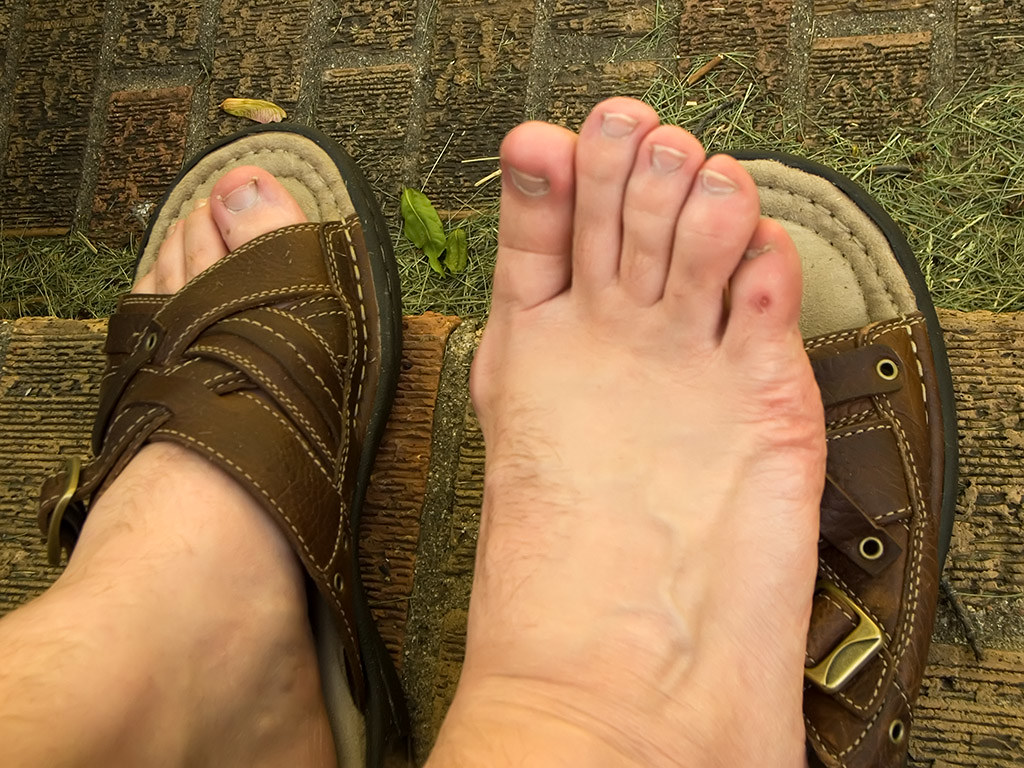
The shoulder-season forecast is honest about the afternoon and quiet about the evening. That hidden half of the day is where the sandal-or-shoes decision actually lives; settle it there and the packing question mostly answers itself.
The swing is the variable, not the temperature
Nobody asks whether sandals work on a warm afternoon; they obviously do. The question is what the same day becomes after sunset, when stone squares and seaside promenades give back their heat and open-toe comfort ends. A day planned around warm hours can still end in cold ones, and the shoe that was right at three in the afternoon can be wrong by nine. Shoulder-season destinations sit in that swing for weeks, and locals switch wardrobes later than visitors expect; they are not the ones walking home at ten at night. The decision line is not the daytime high; it is how many of your waking hours fall on the cold side of it, which depends on how you travel.
One wet afternoon settles it
Rain argues for closed shoes more decisively than any temperature. Straps hold water against the skin and let grit wash onto the footbed, where every later step grinds it under a bare foot. Closed shoes shed the rain but stay damp inside, and a shoe that has not dried by morning becomes a two-day problem. Whether the local rain risk justifies waterproof construction is its own decision, covered in our waterproof city break guide; for the sandal question, the point is simpler. Wet weather removes the sandal’s main advantage, which is drying fast and shrugging off water. Quick-dry materials narrow the gap, which is why fabric choice matters as much as the sandal-or-shoe call itself.
The itinerary weighs in
Long sightseeing days argue for closed shoes almost on their own. An open sandal makes the foot work harder with every step: the toes grip, the stride shortens, and there is nothing under the arch but a strap and a slab of foam. Short, unhurried days in warm places are the opposite case, which is why beach-town walking sandals are their own category. Match the shoe to the day’s mileage first and the thermometer second.
A rule you can pack by
Condensed to one line: sandals for the hours you control, closed shoes for the hours you do not.
| Your trip leans toward | The better default |
|---|---|
| Evenings out and cool nights | Closed shoes as the primary pair |
| Rain in the forecast | Closed shoes in quick-drying materials |
| Hot days and short distances | Sandals by day, closed shoes for evening |
| Full sightseeing mileage | Closed shoes, sandals as a rest-day pair |
Carry-on travelers get a stricter version of the same rule. One closed pair that survives an evening and a shower beats a sandal-and-shoe split on most shoulder-season trips, and the packing math in our weekend packing list assumes exactly that. Add the sandals only when the days are reliably hot and the walking is light.
Shoulder season rewards the pessimist. Pack for the dampest evening you realistically expect, and let the sandals be a bonus rather than the plan.
FAQ
- Can I wear sandals with socks in shoulder season?
- It works for warmth, but socks slip on sandal footbeds once they get damp. If evenings run cold enough to need socks, that is usually the signal to switch to closed shoes instead.
- Are closed-toe sandals a good compromise?
- Often, yes. They protect the toes and handle cooler evenings better than open styles while keeping most of the ventilation. Check the tread before relying on one for wet stone, since many hybrid styles prioritize comfort over grip.
- How many pairs should I pack for a shoulder-season trip?
- Two if luggage allows: one closed pair as the default and one sandal for hot, dry days. Carry-on travelers can usually make do with a single well-chosen closed pair in reliably cool destinations.
On the Ground
Four surfaces, read separately
Airport day
Terminal floors, security lines, overnight feet.
Beach town
Hot pavers, algae-slick steps, sand in everything.
City walking
Old stone that never flexes underfoot.
Trail day
Day-trip dirt that turns to mud by noon.