Guide
On the Ground: Airport Days Ask More From Shoes Than City Days
By Rowan Hale, Footwear Editor · Published Oct 1, 2026 · Updated Oct 1, 2026
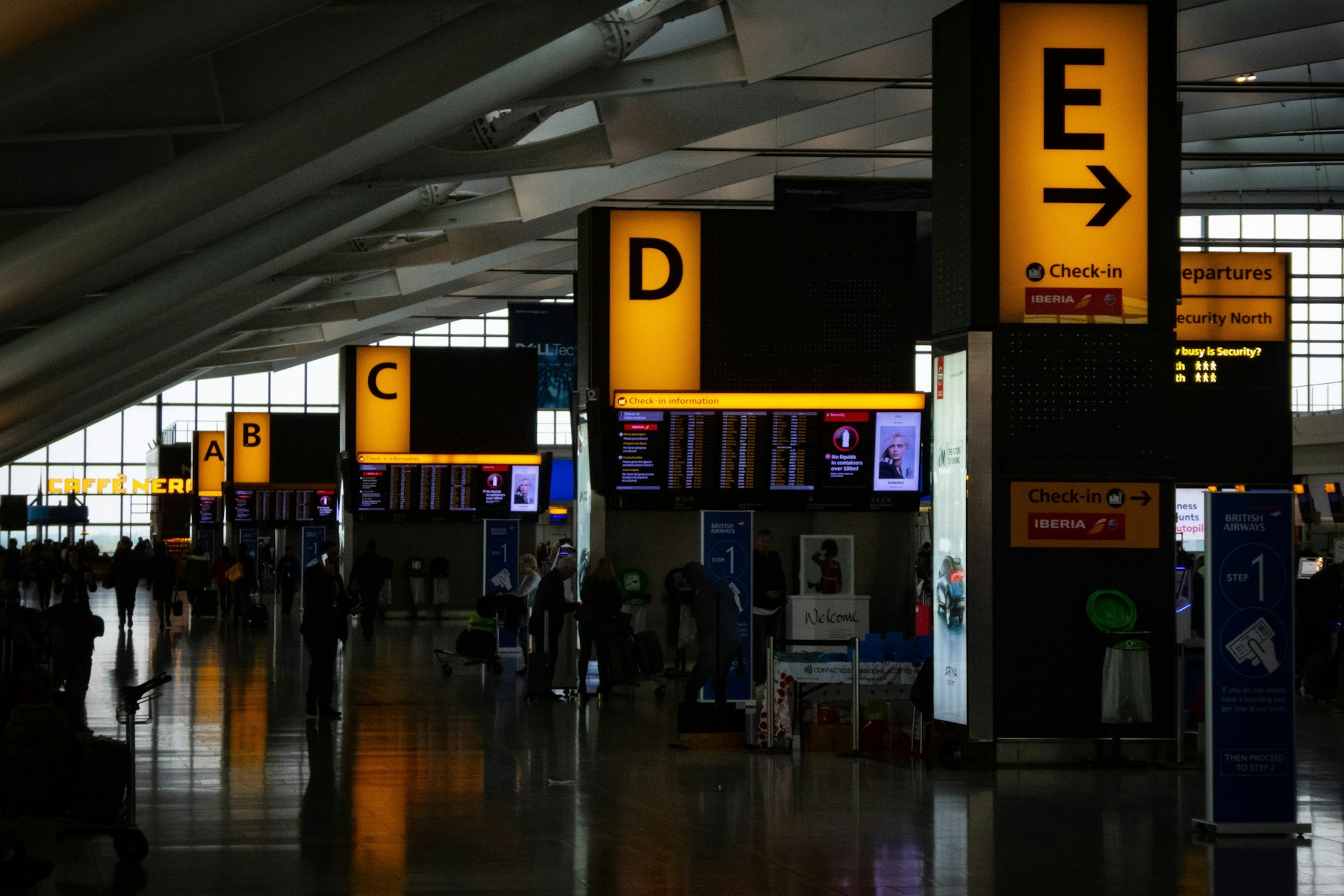
A ten-minute walk and a four-hour layover are not the same job for a shoe, even though the step counts can look similar on a fitness tracker. The distinction is what the body is doing between the steps. A city day is walking. An airport day is mostly standing — in line, at the gate, at baggage claim — interrupted by short, fast, gate-transfer sprints across floors that were poured to survive luggage carts, not your arches. Read the pavement and the terminal is one of the hardest surfaces you will ever dress for.
Why standing hurts differently than walking
The mechanics of a terminal day are lopsided. Walking loads the foot in a rhythm: impact, roll, push-off, brief relief, repeat. Standing loads it statically. Your calf muscles, arch muscles, and the plantar fascia — the band of tissue running from heel to toes along the sole — hold tension continuously to keep you upright, with none of the pumping relief that a stride provides.
Podiatry clinics that treat people who stand for a living describe the pattern consistently. Patient-education material from practices like Thrive Foot and Ankle notes that prolonged static standing keeps the foot and leg muscles under sustained tension, and that the plantar fascia absorbs significant force in every standing moment as well as every step. The same material lists plantar fasciitis as one of the most common complaints among workers who stand all day, alongside swelling in the feet and ankles, which arrives because gravity pools fluid in the lower legs when the calf muscles are not actively pumping it back up.
An airport hands you the worst version of this. Terminal floors are terrazzo, sealed concrete, or dense tile over concrete slab — surfaces with essentially no give. Queue lines remove the option of shifting your weight casually; you stand because the line says so. Then the gate changes and you cover six hundred meters in four minutes with a backpack on, and the pattern inverts to sprint. A shoe tuned only for comfortable walking is not automatically tuned for that mix.
What works in a terminal
Three traits decide whether a shoe survives a travel day, and none of them is cushioning volume.
First, easy on and off without being sloppy. Security is the obvious reason, but it is not the main one. On a long flight, shoes come off. At the arrival gate, they go back onto feet that have spent eight hours compressed and puffy. A shoe that needs two hands, a shoehorn, and a full lace re-tie at gate B47 is a small misery multiplied across every leg of the trip. Slip-ons, side zips, or laces that stay pre-tied and function as a band all earn their keep here. The counterweight: a heel that is too loose will slap and rub over a long gate-to-gate walk, so the easy entry has to come from the construction, not from sizing up.
Second, cushioning with a spine. The useful spec here is a midsole that compresses under load but returns to shape — foam with some firmness in it. Rock-soft, high-stack foam feels like the answer in the first hour and quietly stops being one by the fourth, because an unstable platform makes the small stabilizing muscles in your feet and calves work overtime during exactly the static standing that is already fatiguing them. Occupational footwear designed for nurses and retail workers, the closest professional analogue to a terminal day, consistently favors structured midsoles and a supportive heel counter over maximum squish. Fallbrook Podiatry’s guidance for all-day standing workers makes the same case: a shoe should resist bending in half easily, hold the back of the foot firmly, and keep a slight heel elevation rather than going completely flat.
Third, enough width to tolerate swelling. Terminal days inflate feet from both directions — fluid pooling during the flight, then hours more standing during connections. A forefoot that felt fine in the shop at ten in the morning can feel wedged by the second leg. Breathable uppers with some give, a toe box that does not taper early, and lacing or straps that adjust rather than a fixed elastic band all buy margin.
The overnight-flight problem
Fly overnight and the swelling stops being hypothetical. Cabin hours with the legs dependent, dry air, and the diuretic arithmetic of coffee all push fluid into the lower legs, and the effect is largest right when you put your shoes back on at arrival. The timing matters for shopping too: feet run larger late in the day and after time on them, which is why a shoe fitted at dawn fits differently at dinner.
The practical allowance is modest. You are not buying a bigger size; you are buying fit with a thumb’s width in front of the longest toe, tested while standing, preferably in the afternoon. Adjustable closure covers the rest. If the shoe has real adjustment across the instep and forefoot, it can be snug on the outbound morning and opened a notch on the swollen arrival evening — which is the same shoe doing two jobs, and the whole reason adjustability beats a perfect static fit for travel.
One habit worth borrowing from people who fly weekly for work: get the shoes off mid-flight, move the ankles, walk the aisle once an hour, and re-tie nothing until landing. The shoes that make this easy — slip-ons, travel sneakers with a strap, anything without a double knot — quietly decide whether the last hour of the flight is rest or fidgeting.
What gets left behind
The terminal also has a short list of shoes that keep failing at the same jobs, and the list is worth naming because every item on it looks reasonable at home.
Stiff-soled dress shoes and unbroken leather loafers fail on the standing math. A sole that cannot flex turns every static hour into a heel-and-arch pressure experiment, and leather that has not been walked soft raises its own hot spots by the second connection. They look right at the gate and feel wrong by the hub.
Thin foam flip-flops and slides fail on everything at once. The strap between the toes asks the foot to grip with every step, which is exactly the repetitive tension the plantar fascia does not need on a twelve-hour day. There is no heel counter, no midfoot structure, and the foam that feels plush in the first terminal corridor is flat by baggage claim. They are fine as an in-flight change of shoes in a carry-on. As the primary shoe, they are the most common bad decision in the building.
Brand-new anything is its own category of mistake. The airport day is among the longest sustained wear sessions a travel shoe will see — often ten to fourteen hours from door to door. New shoes reveal their pressure points somewhere past hour six, which is precisely the point where re-tying, swapping, or regretting them is hardest. The trip is not the place to break a shoe in; the trip is where an unbroken shoe shows its invoice.
The one move to make at your next fitting
Stand in the shoe on the shop’s hardest floor for five full minutes without walking, shifting your weight only when you must. If the arch support feels like pressure rather than contact, or the soft foam starts asking your calves to balance you, that is the terminal day showing up early — and it is a sensation no carpeted fitting bench will ever reveal.
FAQ
- Are slip-on shoes actually better for airport security?
- Mostly yes, with one caveat. Slip-ons and side-zip styles cut the fumbling at the bin station, which matters most when you are juggling a tray and a laptop. The caveat is fit: a slip-on loose enough to kick off easily is usually loose enough to slap on the heel during a long gate-to-gate walk.
- How much bigger should I size for a long flight?
- Plan for some swelling rather than sizing up a full size. If a shoe fits with a thumb's width in front of the longest toe while you are standing, it usually absorbs an overnight-flight bloat. Shoes bought to fit snug in the morning are the ones that punish you at arrival.
- Is maximum cushioning the right call for a terminal day?
- Cushioning helps, but stability helps more. Very soft, high-stack foam feels plush for the first hour and then makes your calves and arches work to keep you balanced during long static standing. A firmer midsole with real structure under the arch reads better at hour five.
On the Ground
Four surfaces, read separately
Airport day
Terminal floors, security lines, overnight feet.
Beach town
Hot pavers, algae-slick steps, sand in everything.
City walking
Old stone that never flexes underfoot.
Trail day
Day-trip dirt that turns to mud by noon.