Picks
Do You Actually Need Waterproof Shoes for a City Break?
By Rowan Hale, Footwear Editor · Published Oct 1, 2026 · Updated Oct 1, 2026
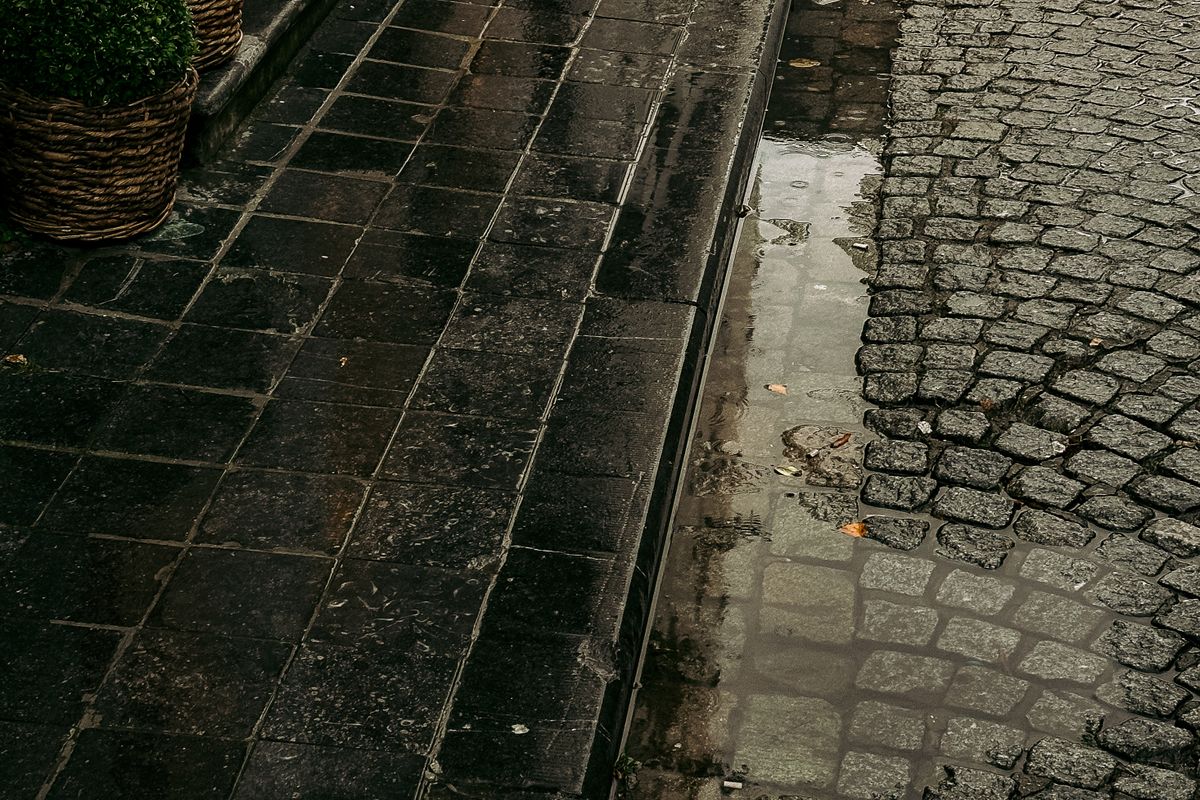
Waterproofing is the most-misbought feature in travel footwear. It sounds like insurance, and in the right season it is. In the wrong season it actively makes your feet wetter — just from the inside. The honest answer to the question in the title is seasonal, and it runs through one mechanism.
What a membrane actually trades
A waterproof membrane is a layered liner behind the upper: liquid water cannot pass in, and water vapor passes out only slowly. That second part is the cost. Walking hard for a few hours produces real sweat; in a membrane shoe on a warm day, that moisture has nowhere to go, and the pattern across verified owner reviews is that damp-from-sweat socks are the most common complaint about waterproof city shoes. The same shoe in 10°C drizzle feels perfect, because external water is the bigger threat and evaporation demand is low.
So the membrane decision is really a temperature decision.
The wet-stone factor people miss
Old city streets hold water. Flagstone, cobble, and polished granite stay slick long after modern pavement dries, which is the mechanism behind our cobblestone walking guide. Here is the nuance: the shoes that handle those streets best are often trail-derived models, and their advantage is grip — softer rubber compounds and real tread — not the membrane. You can buy the wet-stone benefit without buying waterproofing at all.
A seasonal framework
Warm-weather trips (roughly 20°C and up): skip membranes. Choose the most breathable shoe you can, and accept that a downpour means wet shoes that dry overnight. Quick-drying mesh recovers far faster than a soaked membrane liner.
Shoulder seasons (10-20°C, intermittent rain): the membrane earns its place. Morning dew, puddles, and drizzle are common, sweat load is moderate, and cold wet feet are the actual enemy.
Cold and wet (under 10°C, sustained rain): membrane plus a spare sock rotation. At these temperatures the breathability penalty is nearly free.
One more consideration: on any trip with museum days and long pavement mileage, prioritize cushioning and let weather protection ride in your pack as dry socks.
Three picks, three positions
Per our comparison method, each pick represents one stance, based on published specs and current retail listings.
Salomon XA Pro 3D v9 GTX — the full waterproof position.
The published spec lists 315 g per shoe, an 11 mm drop, a 3D Advanced Chassis for stability, and All Terrain Contagrip rubber — the wet-stone grip package — behind a GORE-TEX membrane. Choose it for shoulder-season cities with unpredictable skies; expect a warmer shoe in exchange.
Hoka Clifton 9 — the breathable non-waterproof position.
At $145 and a published 248 g per shoe with a 32 mm heel stack, it is the cushioned road option: plush enough for 25,000-step days, breathable mesh upper, and a road-tread outsole that is fine in dry conditions and honest about its limits on slick stone. Wet shoes? They dry overnight.
On Cloud 6 — the compromise position.
About $150 and roughly 267 g per shoe, the Cloud 6 is a lifestyle-leaning shoe with a wide, stable footprint from its hollow CloudTec pods and a revised opening that is easy on and off. It is neither waterproof nor a road runner — it trades both specialized strengths for an everyday platform that looks at home anywhere in a city.
Bottom line
Skip membranes for summer, buy them for shoulder seasons and winter, and never let waterproofing substitute for grip on old stone. For street-surface specifics, our cobblestone shoe guide covers what tread works and why.
The picks
Some links below are affiliate links — we may earn a commission at no extra cost to you.
Salomon XA Pro 3D v9 GTX
Full waterproof pickA published 315 g per shoe, 11 mm drop, and a 3D Advanced Chassis for stability, with All Terrain Contagrip rubber handling wet stone and a GORE-TEX membrane for shoulder-season drizzle. Runs warm on hot days.
Hoka Clifton 9
Breathable pick $145$145 with a published 248 g per shoe and a 32 mm heel stack — maximum cushioning for long pavement days, a breathable mesh upper, and a road tread that dries out overnight if caught in rain.
On Cloud 6
Compromise pick $150About $150 and roughly 267 g per shoe, with hollow CloudTec pods giving a wide, stable footprint and a revised collar for easy on-off. Neither waterproof nor a dedicated runner — a lifestyle platform for mixed city days.
At a glance
| Pick | Price | Weight per shoe | Membrane | Best for |
|---|---|---|---|---|
| Salomon XA Pro 3D v9 GTX | See store | 315 g | GORE-TEX | Shoulder-season rain, wet stone |
| Hoka Clifton 9 | $145 | 248 g | None | Warm weather, maximum cushioning |
| On Cloud 6 | $150 | ~267 g | None | Everyday city platform, easy on-off |
FAQ
- What does a waterproof membrane cost in comfort?
- Breathability. A membrane blocks water vapor as well as liquid water, so on warm days sweat accumulates inside the shoe and your feet get wet from the inside. On cool days the trade is mostly invisible, which is why membranes feel brilliant in autumn and stifling in summer.
- Why do wet stone streets matter so much?
- Stone stays wet long after asphalt dries and is slicker when damp. Old city centers are built from it. Grip, not waterproofing, is often the real benefit of trail-derived city shoes — their rubber compounds and tread patterns handle wet flagstone better than road sneakers.
- Can I just pack rain shells for my shoes?
- Overshoes keep water out but are clumsy on long walks and easy to lose. For a trip where rain is a background risk rather than a certainty, a quick-drying non-waterproof shoe plus a spare pair of socks is usually the lighter, more comfortable system.
- Do waterproof shoes dry faster if they get soaked?
- No — usually slower. Once water enters over the collar, a membrane liner traps it and the shoe dries from the inside out very slowly. Non-waterproof mesh shoes that soak through also drain and dry far faster, which matters on multi-day trips.
On the Ground
Four surfaces, read separately
Airport day
Terminal floors, security lines, overnight feet.
Beach town
Hot pavers, algae-slick steps, sand in everything.
City walking
Old stone that never flexes underfoot.
Trail day
Day-trip dirt that turns to mud by noon.