Picks
What Belongs in a Blister Kit for Walking Trips
By Rowan Hale, Footwear Editor · Published Nov 10, 2026 · Updated Nov 10, 2026
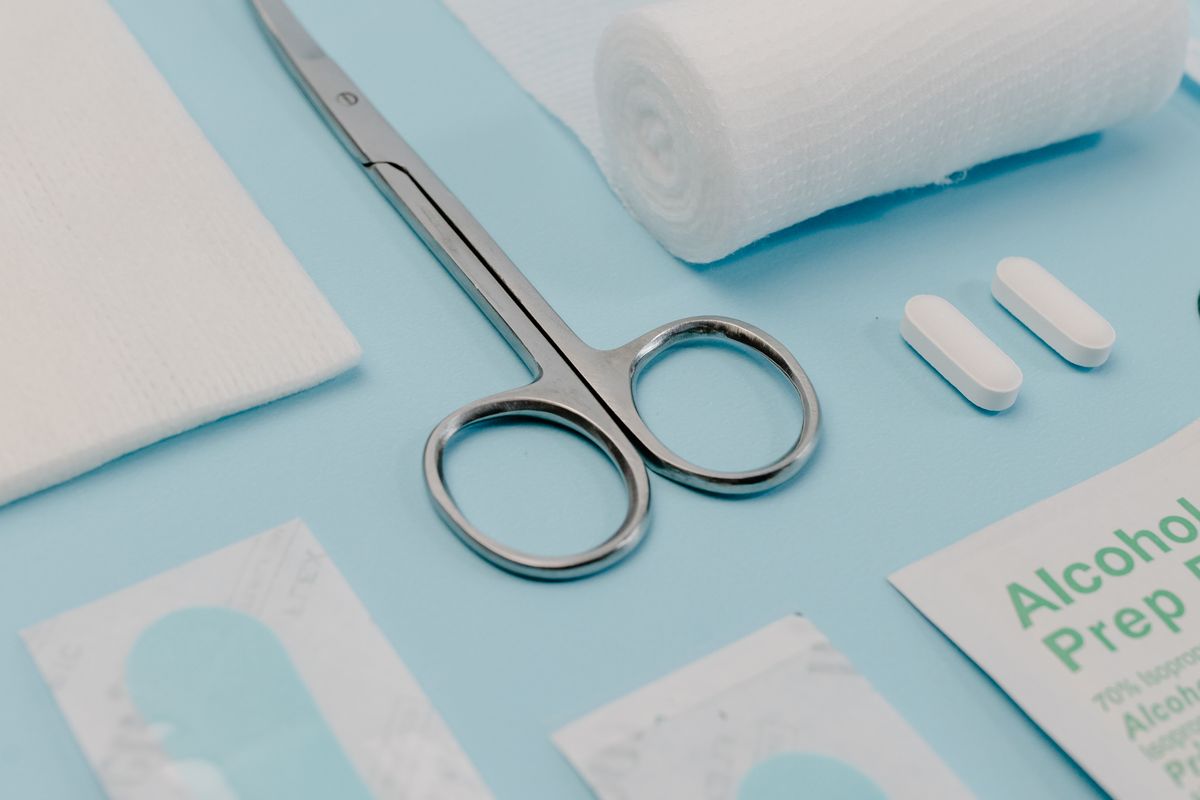
Blister kits fail in a predictable way: they are assembled from whatever bandages were already in the bathroom drawer, then carried to a place where the actual problem — repeated friction inside a shoe, for hours, in heat — needs materials designed for that job. A travel blister kit has to do three separate things, and no single product does all three. It has to reduce friction before the hot spot forms, shield the hot spot once it does, and dress the blister properly if the skin breaks. This piece picks one proven product for each role and explains the sequencing that owner reviews and blister-care guidance converge on.
The friction problem comes first
A blister is a mechanical failure, not a medical one. Skin fails from shear — the repetitive sliding of tissue layers against each other — and that sliding accelerates dramatically with three inputs: moisture, heat, and pressure over a small area. Every serious prevention strategy attacks at least one input. Dry the skin, spread the pressure, or put a low-friction interface between skin and sock. What does not work is ignoring the first warning, which is not pain but warmth — the hot spot stage, when the skin is already damaged and everything after that is damage control.
This is why a blister kit is really two kits. The prevention half gets used every morning, proactively, on the spots that always go bad: the heel edge, the side of the big toe, the ball of the foot. The repair half sits unused until the day it is needed. Travelers who only pack the repair half spend their trips reacting; travelers who pack both spend roughly the same space and lose no sightseeing days to it.
The three picks
Per our comparison method, these come from published product specs, retail listings, and consistent patterns in owner feedback — nothing here was tested in a lab by us.
Spenco 2nd Skin Blister Kit — the repair core of the kit, and the only product here that handles a blister that has already broken. The set pairs sterile hydrocolloid patches with liquid gel squares that overlay the wound, cushioning it while keeping the environment moist — the condition hydrocolloid dressings are designed for, and the reason hospital wound care uses the same material class. Retail listings price the 24-piece package at $14.95. The honest limitation is durability inside a shoe: gel patches are for evening and overnight, and the hydrocolloid layer is what survives a full walking day.
Body Glide Anti-Chafe Formula — the prevention half, used before socks go on. The balm is a dry, invisible stick of plant-derived lubricant that creates the low-friction interface described above, and the 1.5 oz stick is the standard format across ultramarathon aid stations, which is about as strong a field-test as a friction product gets. Retail listings price it at $11.00. Unlike petroleum jelly it does not melt into socks or degrade their wicking, and one application normally holds a full day; wet or humid-route travelers reapply at lunch.
Leukotape P — the shield for a hot spot that has already flared but not broken. This is a rigid, rayon-backed tape with an aggressive zinc oxide adhesive, and its reputation among long-distance walkers rests on a single property: it stays on through sweat for days, where ordinary athletic tape slides off within an hour. It functions as a sacrificial layer — the shoe rubs the tape, not the skin. Two cautions repeat across user feedback: round the corners of each strip so edges do not catch on socks, and never apply it over broken skin, because removal can tear fragile tissue.
How the three actually sequence on a trip day
The morning routine takes one minute. Apply the anti-chafe balm to known hot spots before socks. If a particular spot is already warm from yesterday, tape it before the balm, since the tape needs clean, dry skin to bond properly. Then walk, and address warmth the moment you feel it rather than at the end of the day — the entire premise of the kit is that ten minutes at lunch beats three days of compensation walking.
At lunch, a hot spot gets tape or balm depending on its state: intact skin gets balm or fresh tape, reddened skin gets tape. At the hotel, anything blistered gets cleaned, left intact if the roof holds, and dressed with the 2nd Skin hydrocolloid patch overnight. Hydrocolloid dressings are left on for several days by design, so the same patch can carry you through the next walking day without a re-dressing.
Packing it without overpacking it
The full kit fits a zippered pouch smaller than a wallet, but most travelers can go lighter. The travel-weight version is a 0.8 oz balm stick, four to six hydrocolloid pads in a small zip bag, and ten strips of Leukotape wrapped around a pen barrel — the tape’s own backing paper protects the adhesive until use. Weight is negligible; the reason to keep it small is that a kit you have to dig for at a lunchtime hot spot is a kit you will skip using.
Two adjacent purchases reduce the kit’s workload more than any product inside it. Socks are the first: friction loads drop sharply when the sock layer manages moisture instead of holding it against skin, which is the argument in our comparison of merino versus cotton socks for a walking day. Fit is the second: a heel that moves a few millimeters per step manufactures hot spots faster than any balm can neutralize them, and our fixes for shoes rubbing at the heel address the mechanical cause directly.
Sizing the kit to trip length and climate
A blister kit scales with two variables, and neither is trip length alone. The first is climate: heat and humidity multiply the friction problem, because sweat is the lubricant skin does not want and moisture softens the stratum corneum until it fails at lower shear. A summer city trip consumes balm and tape at roughly double the rate of the same itinerary in October, so the packing split shifts — more prevention consumables, same repair core. The second variable is shoe familiarity. A trip that starts with shoes that have fewer than twenty kilometers on them should carry double the tape and pads, because the break-in window is where blisters concentrate; a trip in an already-confirmed pair can travel on a fraction of the repair stock.
Trip length then caps both halves. A weekend needs roughly six hydrocolloid pads, a short tape roll, and a 0.8 oz balm stick. Trips past a week justify the full sizes of everything, because the per-gram weight penalty of a full balm stick amortizes over more days than it costs. The calculation that most travelers get backwards is carrying repair stock proportional to days: repair demand does not grow linearly with trip length once shoes are settled — it spikes on the first two days and after any shoe or sock change, which is where the spare pads belong.
The mistakes that cost real walking days
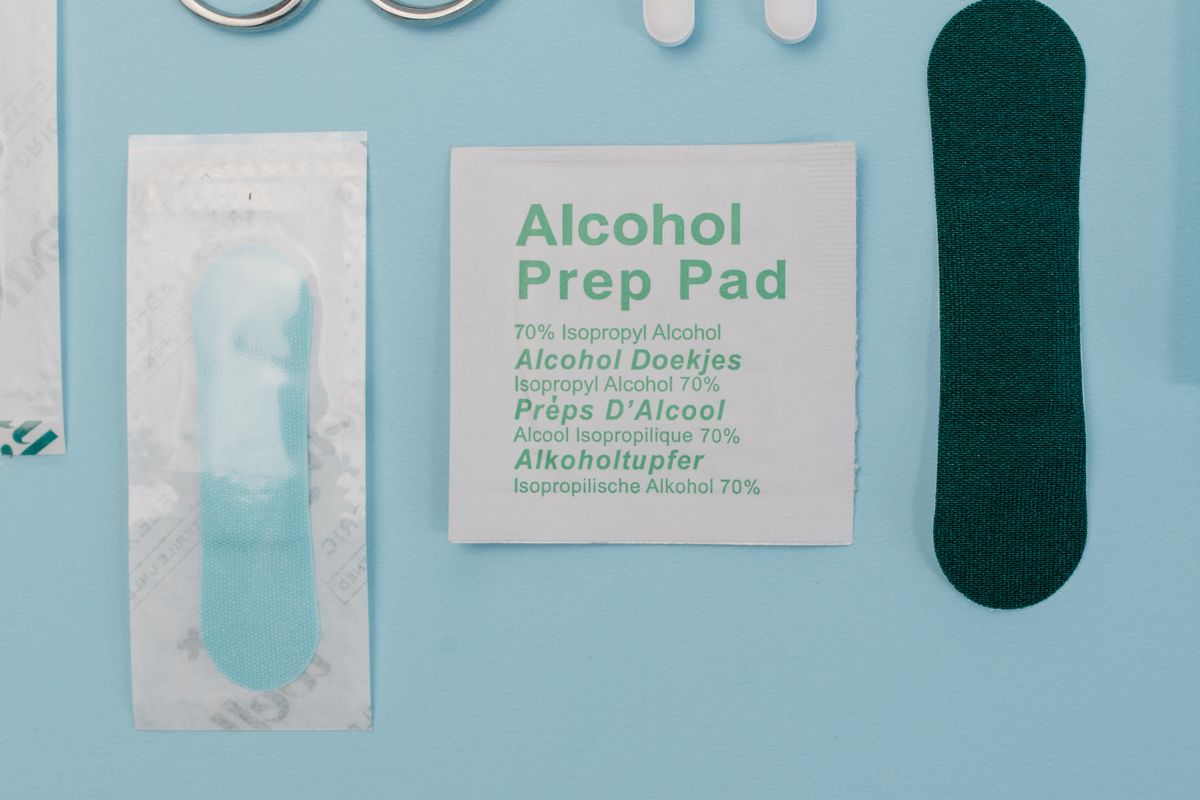
Three errors account for most blister-kit failures on the road. The first is dressing over dirt. A hydrocolloid pad sealed over grit traps the grit against the wound for days, and the infection risk outweighs every cushioning benefit — a ten-second wipe with an alcohol pad, or even a clean tissue and water, is the non-negotiable step. The second is taping too late in the hot-spot arc. Tape applied to damp, already-inflamed skin either does not bond or bonds over damaged tissue and takes it off on removal; the effective window is the first warmth, not the first wince. The third is ignoring the sock interface entirely — a fresh dressing under a sweat-soaked cotton sock recreates the moisture problem the dressing just solved, which is why the sock choice travels with the kit rather than instead of it.
One structural habit closes the loop: recheck the kit’s contents before every trip rather than assuming it survived the last one. Hydrocolloid pads have shelf lives once opened, tape rolls lose adhesion at the loose end, and balm sticks travel down without anyone noticing. A kit audited the night before departure has never failed a walking day; a kit carried on trust has, repeatedly.
What the kit cannot fix
No dressing repairs a shoe that is wrong for the foot. A blister kit manages symptoms with increasing efficiency; it does not change the pressure map inside your shoe. If the same spot flares every single day regardless of tape and balm, the friction source is structural — a heel counter shape, a seam position, a length mismatch — and the honest move is lacing changes, different socks, or a different shoe, not a thicker tape. Our guide to all-day walking socks covers the layer that most often decides whether the kit gets used at all.
One last distinction worth carrying: prevention products fail safe and repair products fail silently. If the balm wears off, you feel it and reapply. If a hydrocolloid patch lifts at the edge, it keeps protecting the center for hours, and the only failure is the one you discover days later at home. Build the kit so the silent failures have backups — a second pad in the daypack, a strip of tape in the jacket pocket — and the whole system stops having single points of failure.
The picks
Some links below are affiliate links — we may earn a commission at no extra cost to you.
Spenco 2nd Skin Blister Kit
Best for broken blisters $14.95Hydrocolloid patches plus liquid gel squares that cushion and keep a broken blister moist while it heals. Retail listings price the 24-piece kit at $14.95. The repair core of any walking trip kit.
Body Glide Anti-Chafe Formula
Best prevention $11.00A dry, plant-derived balm stick applied before socks to stop friction before it starts. Retail listings price the 1.5 oz stick at $11.00. It does not melt into or degrade technical socks the way petroleum jelly can.
Leukotape P
Best for stubborn hot spotsRigid rayon-backed tape with an aggressive zinc oxide adhesive that holds through sweat for days, working as a sacrificial layer between shoe and skin. Round the strip corners before applying, and never use it over broken skin.
At a glance
| Pick | Role | Format | Best for |
|---|---|---|---|
| Spenco 2nd Skin Blister Kit | Repair | Hydrocolloid patches plus gel squares, 24 pieces | Dressing blisters that have already broken |
| Body Glide Anti-Chafe Formula | Prevention | 1.5 oz dry balm stick | Daily morning application on known hot spots |
| Leukotape P | Shield | 1.5 in rigid zinc oxide tape roll | Hot spots that flare daily despite balm |
FAQ
- Should I pop a blister before dressing it?
- Generally no. The fluid roof is a sterile biological dressing, and an intact blister heals with less infection risk than a drained one. If a blister is large and tense enough that walking is impossible, drain it at the edge with a sterilized needle, keep the roof on, and dress it — and never tape over broken skin with rigid adhesive.
- What is the difference between hydrocolloid pads and regular bandages?
- Hydrocolloid pads seal the wound and hold moisture against it, which cushions the spot and supports healing for days without changing the dressing. A regular adhesive bandage protects but dries the wound out and usually peels off inside a shoe within hours.
- How much of this kit fits in a daypack?
- All of it. A strip of anti-chafe balm, a few hydrocolloid pads, and a short roll of tape wrapped around a pencil weigh well under 100 grams combined and take less space than a phone charger. The full versions of each product stay in the room or the main bag.
On the Ground
Four surfaces, read separately
Airport day
Terminal floors, security lines, overnight feet.
Beach town
Hot pavers, algae-slick steps, sand in everything.
City walking
Old stone that never flexes underfoot.
Trail day
Day-trip dirt that turns to mud by noon.