Guide
Leather Shoes on the Road: What They Ask of You
By Rowan Hale, Footwear Editor · Published Oct 7, 2026 · Updated Oct 7, 2026
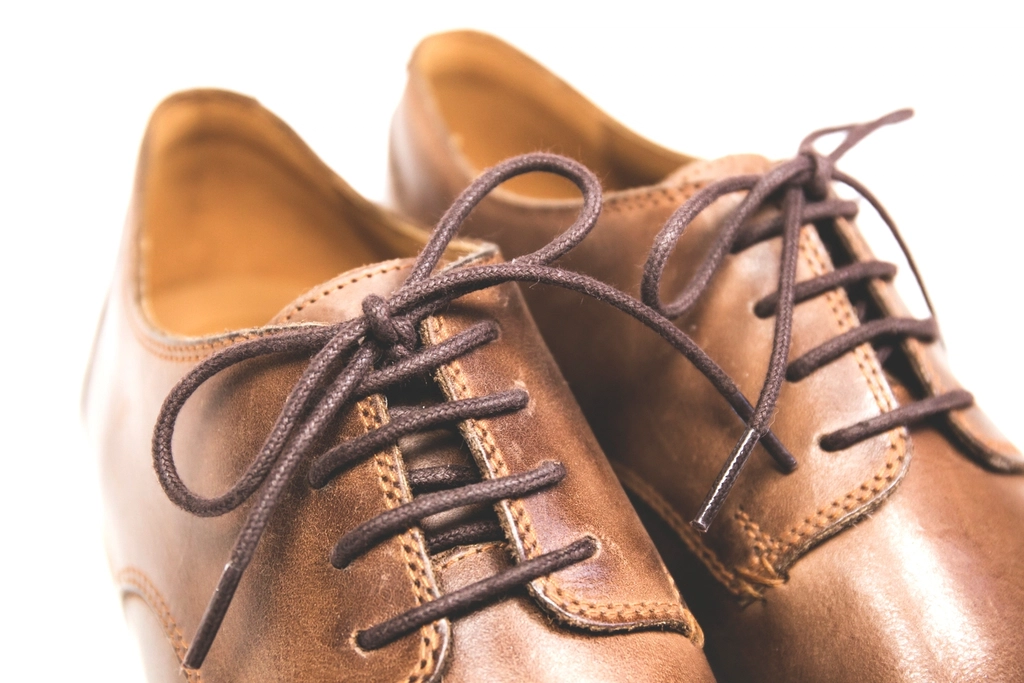
Leather photographs beautifully, and then it rains. On the road, the material’s best qualities — the structure, the way it ages — all carry invoices, and four of them arrive whether or not you ordered them. None of these costs is huge alone. They compound, which is how leather pairs come home tired from trips a synthetic shrugs off.
Water and heat bill you first
Untreated leather soaks up rain as stains, and the marks rarely dry out evenly; a pair caught in one shower can show tide lines for the rest of the trip. Light-colored leathers show it worst, since street grime rides in with the water and settles into the grain. Then comes the drying, because hotel rooms put radiators and heating vents exactly where wet shoes want to sit. Heat pulls the natural oils out of leather, and leather that dries fast and hot comes back stiff and cracked at the flex points, sometimes half a size smaller. A waterproofing treatment before departure moves the odds — how to waterproof shoes before a rainy trip covers the options — but treatment buys resistance rather than immunity, and repeated saturation beats any coating eventually — the seams and stitching lines drink first, so cover those even if the panels get skipped. Conditioning afterward restores some of what the heat took, but only if the leather dried slowly enough to stay worth restoring.
Deformation and time are the slower invoices
Packed leather takes a set. A pair stuffed mid-crease into a bag corner keeps that crease, and drying overnight without paper in the toe adds warping of its own. Stuff the toes with paper on every travel night, wet or dry; it costs nothing and holds the shape the material would otherwise lose. The last cost is simply minutes: leather wants a wipe after wet streets and occasional conditioning, plus deliberate placement while it dries, none of which a membrane sneaker ever asks for. Travelers carrying a compact care kit spend less of that time, but the tax never reaches zero.
Where the price makes sense
Short urban trips in dry seasons are where leather earns its luggage space. One pair can cover dinners and daytime walking without looking wrong in either setting. The forecast poses little risk, and a few nights of careful placement are a small bill. Business-heavy itineraries belong here too, wherever one pair has to pass in a meeting room and still walk ten blocks afterward. This is the scenario the material was built for, and the nightly ritual shrinks with practice: thirty seconds of wiping beats ten minutes of rescue.
Where it does not
Rain-heavy itineraries, beach towns, and any route built around long mileage flip the arithmetic. Leather under those conditions costs maintenance every night and still risks permanent damage, while a technical travel shoe takes the same days in stride. Owner reviews commonly note the pattern with dress-leather sneakers taken to wet cities: handsome on arrival, marked by day three. The honest rule is to buy leather for the calendar rather than the closet — dry-season city breaks repay the care, and everything else charges interest a sneaker never will.
FAQ
- Does waterproofing spray make leather shoes rainproof?
- It makes them water-resistant, which is a different promise. A treatment helps water bead and buys time to wipe the shoe dry, but sustained rain still soaks seams and lining. Treat before the trip and reapply on longer travels.
- How do I fix leather shoes that got soaked and dried stiff?
- Work a leather conditioner into the dry leather over a day or two at room temperature, and expect improvement rather than a full recovery. Cracks at the flex points are permanent. Prevention — slow drying, paper in the toe, no radiators — is the real fix.
- Are leather sneakers worse for travel than dress leather shoes?
- Usually they are a middle ground. Sneaker construction with leather uppers dries and flexes more forgivingly than dress construction, but the upper still stains, still dries out, and still wants the same nightly care in wet weather.
On the Ground
Four surfaces, read separately
Airport day
Terminal floors, security lines, overnight feet.
Beach town
Hot pavers, algae-slick steps, sand in everything.
City walking
Old stone that never flexes underfoot.
Trail day
Day-trip dirt that turns to mud by noon.