Guide
Shoe Sizing for Travel: Width, Arch, Sock Thickness
By Rowan Hale, Footwear Editor · Published Oct 1, 2026 · Updated Oct 1, 2026
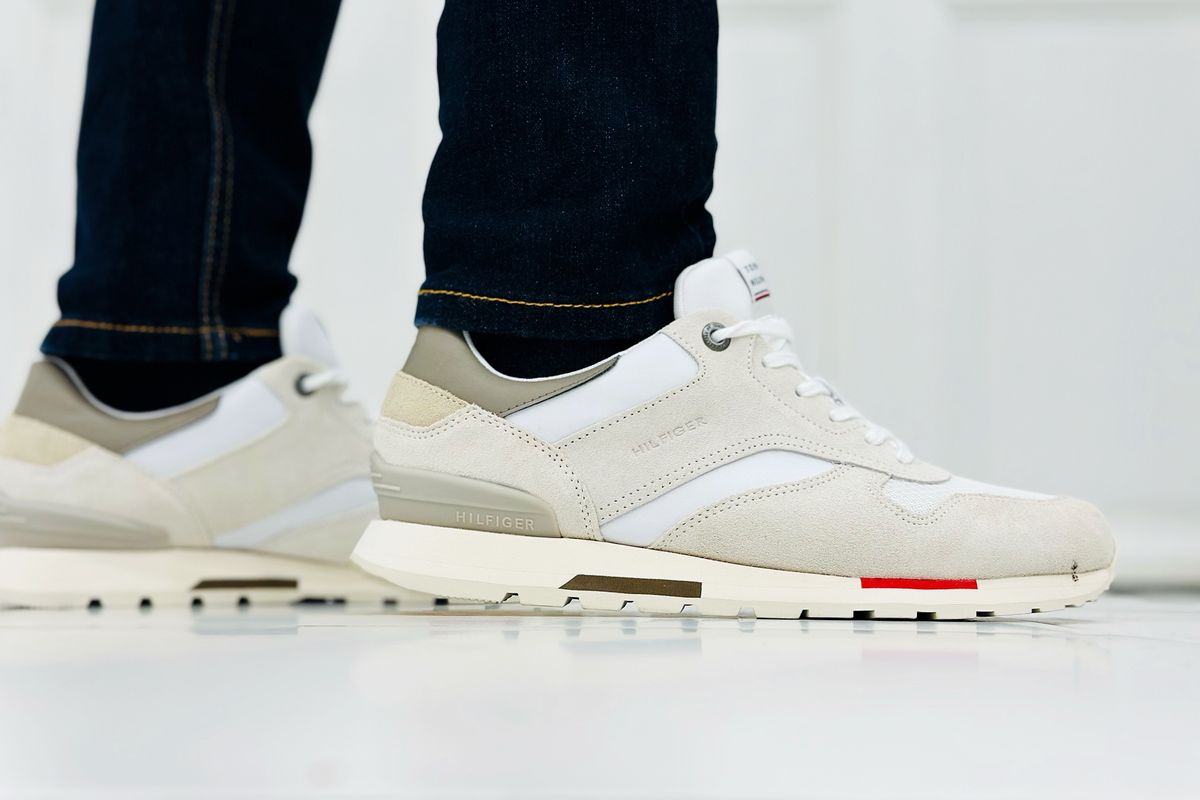
Travel punishes shoe sizing mistakes harder than daily life does, because a travel day multiplies everything: more hours on foot, more heat, more swelling, and no comfortable pair waiting at home. Three variables decide whether a shoe works on a trip — and none of them is the number on the tongue tag.
Measure in the afternoon, not the morning
Feet swell through the day. Standing and walking push fluid into the soft tissue, adding measurable volume by late afternoon — which is exactly the state your feet will be in for most of a travel day. A shoe fitted to a morning measurement fits only the first hour of a travel day.
The practical version: measure at the end of a normal day, standing, with weight on the measured foot. Trace both feet too — most people have a size difference between them, and the larger foot sets the size.
Width is the variable people get wrong
Length is the number everyone knows, and it is also the one that matters least. Length mainly protects the toes. Width is what decides whether hours six through ten hurt, because the ball of the foot and the little toe take the pressure on every single stride.
The failure pattern shows up in buyer reviews with striking consistency: shoes rated true to length but narrow, with side-of-foot soreness reported after long days. The fix is to treat width as a measured variable, not a default. Measure across the ball of the foot while standing, compare it to the brand’s width chart, and take the width letter seriously — several major brands, New Balance most famously, build many models in multiple widths, and Altra designs the toe box around foot shape instead. Our travel shoe selection guide puts width checks ahead of almost every other spec for exactly this reason.
Arch type: a rough self-check, with limits
The classic wet-foot test — stand on paper with a wet sole and read the footprint — gives a usable first read. A near-complete print suggests a lower arch; a thin strip connecting heel and forefoot suggests a high one; something in between reads neutral.
The limits matter more than the test: it captures the foot at rest, unloaded, and says nothing about how the arch moves under load, which is what shoe support has to match. A better behavioral read: do your feet ache across the middle after long walks, do your shoes tilt visibly inward or outward on a flat surface, do you instinctively roll onto the outside edge of the foot? Those patterns, repeated across many walks, tell you more than any single footprint. When in doubt, neutral cushioning beats a rigid support guess.
The sock variable
Sock thickness quietly changes shoe fit by up to a half size worth of volume. A thick winter or hiking sock fills the toe box, tightens the midfoot, and shortens the effective length; a thin liner leaves the same shoe feeling loose. Trying travel shoes with the thickest socks you plan to wear is the cheapest fitting upgrade there is — our travel socks guide covers the reasoning, and it belongs in the fitting room, not on the trip.
The travel fitting checklist
Measure both feet standing, late in the day. Buy to the larger foot. Check width against a real chart, not habit. Try the shoes with travel socks on. Walk the store long enough to feel the arch, not just the toes. None of it needs more than a tape measure and one honest afternoon.
FAQ
- When is the best time to measure your feet for shoes?
- Late afternoon or early evening, after a normal day of standing and walking. Feet swell through the day, and the swollen measurement matches how your feet will actually feel on a full travel day — not the morning number.
- How do I know my foot width?
- Measure across the ball of the foot with a tape while standing, and compare it to a brand's width chart rather than assuming your usual letter. Signs you need a wider fit include sharp creasing over the little toe and soreness on the sides of the feet after walks.
- Does the wet foot test actually work for arch type?
- It gives a rough first read — a full footprint suggests a lower arch, a thin connecting strip a higher one. But it measures the foot at rest, not how the arch moves under load, so treat it as a starting point rather than a verdict.
On the Ground
Four surfaces, read separately
Airport day
Terminal floors, security lines, overnight feet.
Beach town
Hot pavers, algae-slick steps, sand in everything.
City walking
Old stone that never flexes underfoot.
Trail day
Day-trip dirt that turns to mud by noon.