Guide
Road Trip Trunk vs Carry-On: Where Shoes Take the Beating
By Rowan Hale, Footwear Editor · Published Oct 11, 2026 · Updated Oct 11, 2026
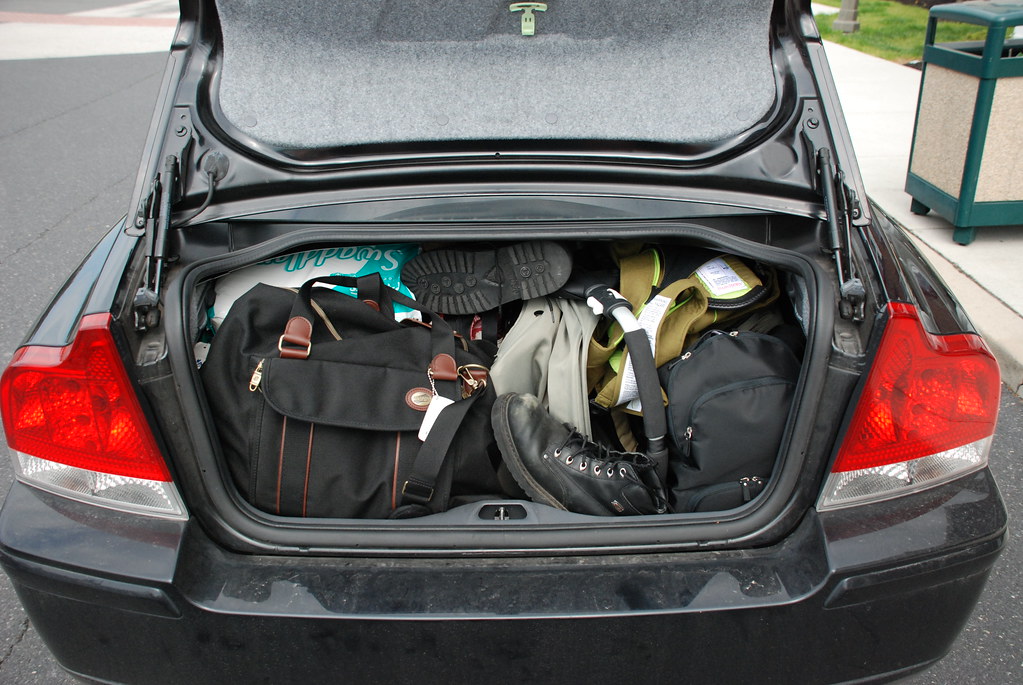
A road trip and a carry-on flight punish shoes in opposite ways. The trunk offers unlimited space and lets shoes rot into a forgotten, crushed pile under cargo; the carry-on forces ruthless selection and then compresses whatever survived it. The right strategy is the mirror image in each case, and neither one is “throw them in loose.”
In the Trunk: Space Is the Enemy
With no size constraint, the failure mode is bringing too many pairs and letting every pair except the one on your feet degrade. Shoes ride loose, collect trunk grit, and end up wedged under a cooler by day three, while the rear shelf bakes them in direct sun. The fix is structure, not sacrifice. Keep two or three pairs in a tote so they stay paired and upright; wear the bulkiest pair on driving days; leave nothing baking in the window — heat is harder on midsoles and adhesives than most travelers assume. A car also multiplies odor. Damp sandals sealed in a bag for two days will perfume the whole vehicle, so give each pair air before it goes back in.
In the Carry-On: Volume Decides Everything
A carry-on allots each pair of shoes roughly a shoe-box worth of space, so the real decision happens at home: wear the heaviest pair in transit, and pack at most one or two more. Stuff each shoe with socks or small items to hold its shape — that doubles as free packing space — then bag them and lay them sole-down along the case edge where the structure is strongest. Our guide to packing shoes without crushing your clothes covers placement in detail, and the carry-on-only personal item breakdown shows what survives when even a roller case is out of the question.
What Beats the Shoes Up
Road trip damage is environmental: cargo crush and rear-shelf heat, plus grit working into the uppers. The quiet killer is repetition — pairs worn two days running because the rotation slips a day and never comes back. Carry-on damage is structural: midsoles creasing under compression, toe boxes deformed by whatever got stacked on top. Odor migrates into every garment packed beside them. The two failure lists barely overlap, which is why generic packing advice serves both poorly. The one shared enemy is wearing the same pair every single day, and the one shared fix is the same on both trips.
The Rotation, Adapted to Each Vehicle
The core discipline is identical: a defined two- or three-pair rotation with a rest day per pair, which our two-pair rotation guide lays out fully. On a road trip, add a trunk kit: a soft bag with a mesh stuff sack, plus spare socks, so today’s pair can air out overnight. On a carry-on trip, the rotation must be decided at packing time, because there is no room to improvise later. Either way, choose shoes that serve two settings each: a walking sneaker that passes at dinner, a sandal or flat that handles downtime. Two versatile pairs beat three specialist pairs in both vehicles.
FAQ
- How many pairs of shoes for a road trip?
- Two or three. One driving-and-walking pair, one casual pair, and optionally a sandal. Keep them in a tote so they stay paired and protected from trunk grit and heat.
- How many pairs fit in a carry-on?
- Realistically two: the bulkiest pair worn in transit, plus one packed pair. Stuff shoes with socks to hold their shape, bag them, and lay them sole-down along the case edge.
- Should shoes go in checked luggage or carry-on?
- Carry-on if the first day matters — checked bags can arrive late, and shoes are the item hardest to replace on short notice. In either case, bag them separately to keep odor and street grit off clothing.
On the Ground
Four surfaces, read separately
Airport day
Terminal floors, security lines, overnight feet.
Beach town
Hot pavers, algae-slick steps, sand in everything.
City walking
Old stone that never flexes underfoot.
Trail day
Day-trip dirt that turns to mud by noon.