Guide
Hoka vs Allbirds for Travel Walking
By Rowan Hale, Footwear Editor · Published Oct 1, 2026 · Updated Oct 1, 2026
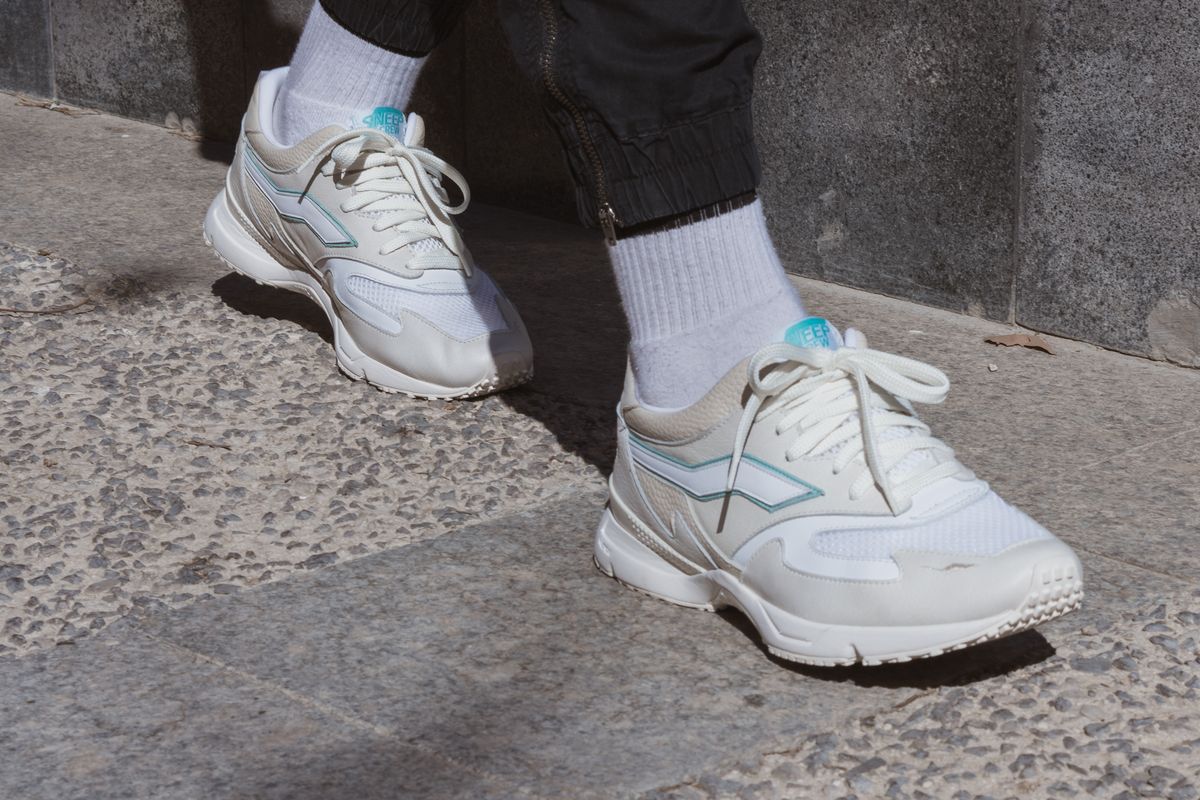
Hoka vs Allbirds walking is less a head-to-head and more a question of what kind of walking day you are packing for. Both brands sell comfort, but they reach it from opposite directions, and the published specs make the split easy to see.
Two Opposite Design Philosophies
Hoka builds performance max-cushion. The Clifton 9, the current version of the brand’s flagship trainer, carries a heel stack retail listings put at 38 mm for men with a 5 mm drop, a compression-molded EVA midsole, and the early-stage MetaRocker geometry that rolls each step from heel to toe. The entire design brief is protecting your legs across long distances on hard pavement.
Allbirds builds casual minimalist. The Tree Runners use a eucalyptus-fiber TENCEL Lyocell upper over a SweetFoam midsole made in part from sugarcane, and the whole shoe is machine-washable. There is no rock plate, no aggressive outsole rubber, and little structure — owner reviews commonly note that the sole wears faster than a performance trainer’s and that arch support is minimal. These are lifestyle sneakers by intent, and they behave like it under load.
Long Mileage Days vs Easy Strolls
On a ten-mile sightseeing day, the difference shows up in your calves and soles. The Clifton 9’s tall stack and rocker keep constant hard-surface pounding from turning into sore feet, and at roughly 8.7 ounces per men’s shoe it stays remarkably light for the cushion depth. The pattern across verified buyer reviews is that Clifton-class Hokas work as all-day walking shoes precisely because they are running shoes underneath.
Tree Runners shine on the opposite kind of day: a few miles of strolling, café stops, and transit, especially in warm weather where the breathable knit earns its keep. They pack flat, air out overnight, and go through a washing machine without complaint — none of which applies to the Hoka. But on cobblestones and long pavement stretches, the thin, soft midsole gives your feet far less protection. Our piece on why cobblestone punishes stiff midsoles explains the mechanics, and the mirror-image problem applies to shoes this soft and thin.
Which One Belongs in Your Bag
If your trip is itinerary-heavy — museum miles, big cities, full days on foot — the Clifton 9 is the better walking tool, full stop. If your trip is relaxed and low-mileage, or you want a second shoe that breathes and washes easily, the Tree Runners make sense.
The honest answer for most travelers is that these are complements, not substitutes: Hoka for the heavy days, Allbirds for the light ones. If you only have room for one pair and your days involve real distance, choose the Hoka. Our guide to choosing travel shoes walks through that decision based on daily mileage and climate, and our picks for cobblestone streets cover the old-city cases where both of these have limits.
FAQ
- Are Hokas or Allbirds better for walking all day?
- For long, itinerary-heavy days, the Hoka Clifton 9 has the deeper cushioning and rocker geometry that hold up over high mileage. Allbirds Tree Runners suit relaxed, lower-mileage days where breathable comfort matters more than underfoot protection.
- Can you run in Allbirds Tree Runners?
- Short casual distances, yes, but they are casual sneakers rather than running shoes. Allbirds positions the Dasher line for running; the Tree Runner is built for everyday wear.
- Do Hokas or Allbirds pack lighter in a carry-on?
- Allbirds are lighter and more flexible, so they compress more easily. The Clifton 9 is light for a max-cushion shoe at about 8.7 ounces per men's shoe, but it takes up more space.
On the Ground
Four surfaces, read separately
Airport day
Terminal floors, security lines, overnight feet.
Beach town
Hot pavers, algae-slick steps, sand in everything.
City walking
Old stone that never flexes underfoot.
Trail day
Day-trip dirt that turns to mud by noon.